
Our Responsibility Is Unchanged: Democracy, Voting Rights, and the Well-Being of Families
October 28, 2026
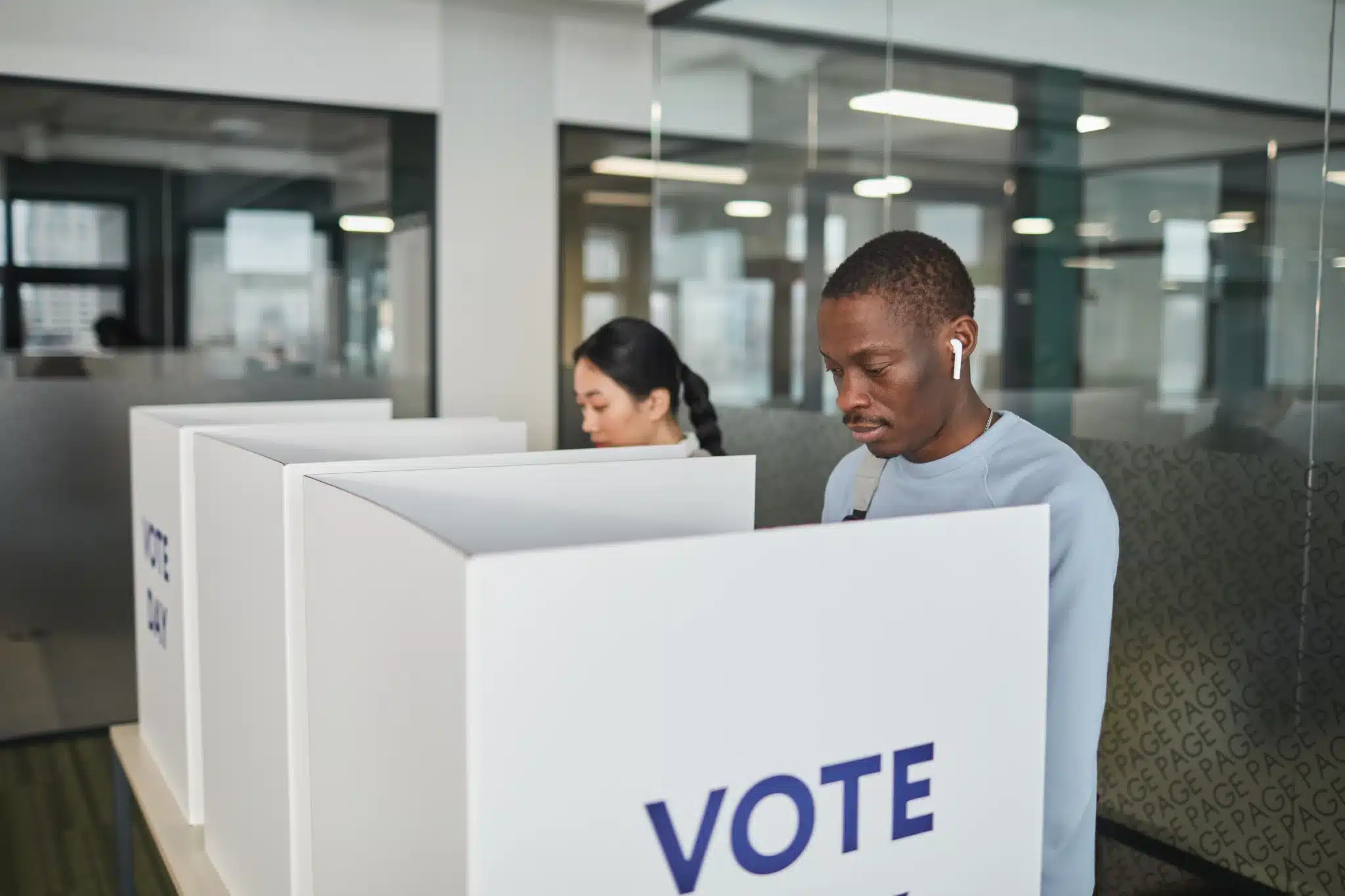
As we move into November, and I prepare to cast my ballot this year, I have been reflecting on the impact of democracy on the day-to-day lives of families. Democracy, at its core, is about power residing with the people. It means we all have a voice in the decisions that impact our lives and families. However, a democracy is not a given; it requires continuous commitment to thrive. Democratic progress can be reversed and institutions that protect us can be dismantled. To promote the health and well-being of democracy, and our families, we have to work together.
Recently, CSSP brought thoughtful people across the country together at our summit Ideas into Action: Seeking a Just Future for Families. As a part of the conversations we held that day, Dr. Khalil Gibran Muhammad and Markita Barideaux offered wisdom about democracy to consider in this moment. “Democracy,” Khalil told us in his opening remarks, “is not simply whether we hold elections every two or four years.” As he emphasized, the true strength and meaning of our democracy is in the world that we strive to build for each other, a world where our institutions empower and serve all of us equally. Khalil’s remarks bid us to remember that freedom and democracy are won when we hold fast and fight for each other.
These words have been strengthening me as I contemplate the state of our democracy. When I was a boy, my mother took me with her every time she went to vote. Bringing me right into the booth, she taught me to participate in democracy by casting a ballot, something my own grandparents and great-grandparents were never able to do. I knew our voting rights were hard-won. They had been opposed vigorously by those in power who sought to hoard that power and to exclude Black and Brown people. Using literacy tests, poll taxes, racial gerrymandering, intimidation, and terrorist violence, opponents of democracy fought hard to curtail access to the ballot. But communities worked together across racial, class, and geographic lines to advance their vision of a more complete democracy. Their crowning achievement was the Voting Rights Act of 1965.
This landmark legislation passed the year I was born. It required jurisdictions with histories of racial discrimination to prove to the federal government that any proposed changes to their voting laws, policies, or practices were not discriminatory. It allowed voters to challenge laws and practices that undermined their equal political opportunity to elect candidates of their choice. Over my lifetime, we’ve seen an increase in voter participation, more competitive elections, a steady rise in the numbers of Black and Brown elected officials across local, state, and the federal government, and politicians’ increased support for legislation addressing racial and ethnic discrimination; these changes have created a more inclusive world for all of us. While the law certainly did not erase all obstacles to voting, it was a promise that all of us—regardless of race, ethnicity, or zip code— had a voice that mattered.
Today, just over 60 years later, that promise has been broken. We have seen that the democracy in which we felt so secure was in fact fragile. Without a widespread and sustained effort to both defend and advance democratic gains, those opposed to democracy have successfully mobilized to dismantle the law. The Supreme Court has gutted the Voting Rights Act by drastically limiting the law’s effectiveness as a tool to protect the voting power of Black and Brown communities and we have witnessed the rise of blatant voter suppression efforts and electoral disinformation from government officials.
The undermining of voting rights is alarming. It is an attempt to drag us back into a past where only some voices, and people, mattered. Research has shown that earlier roll-backs to the Voting Rights Act (in 2013 and 2021) increased the racial gap in voter turnout. The real day-to-day consequences of voter suppression adversely impact all of our communities. When people are unable to exercise their rights to vote, their voices aren’t heard, government programs and initiatives their families need go unchampioned, and meaningful accountability is compromised.
Now more than ever, as communities’ voices are marginalized, we must reaffirm our commitment to a healthy and thriving democracy—and making this the reality for every child, young person, and family in the United States. To CSSP, this requires protecting access to the ballot, so that children today can go with their parents and grandparents into the voting booth, and learn about the power and responsibility of participating in democracy. It also requires fighting for a robust democracy beyond the ballot box. We must ensure that public policy and systems promote the health and well-being of every child, young person, and family, respect families’ voices regarding their needs, and are held accountable to the individuals and families they serve.
Whatever space we occupy—as policy organizations, providers, researchers, systems administrators, and funders—each of us must play our role in building a world that reflects, respects, and protects all families. Our country faces tremendous headwinds. Yet as Markita reminded us in the summit’s closing remarks, in our work to build a just world for children, youth, and families, “[our] responsibility is unchanged.” Markita charged us with holding steadfast. “Whatever happens in November,” she told us, “We hold families steady. We stay. We repair. We keep doing the work.” I challenge us to heed her call.